srekit
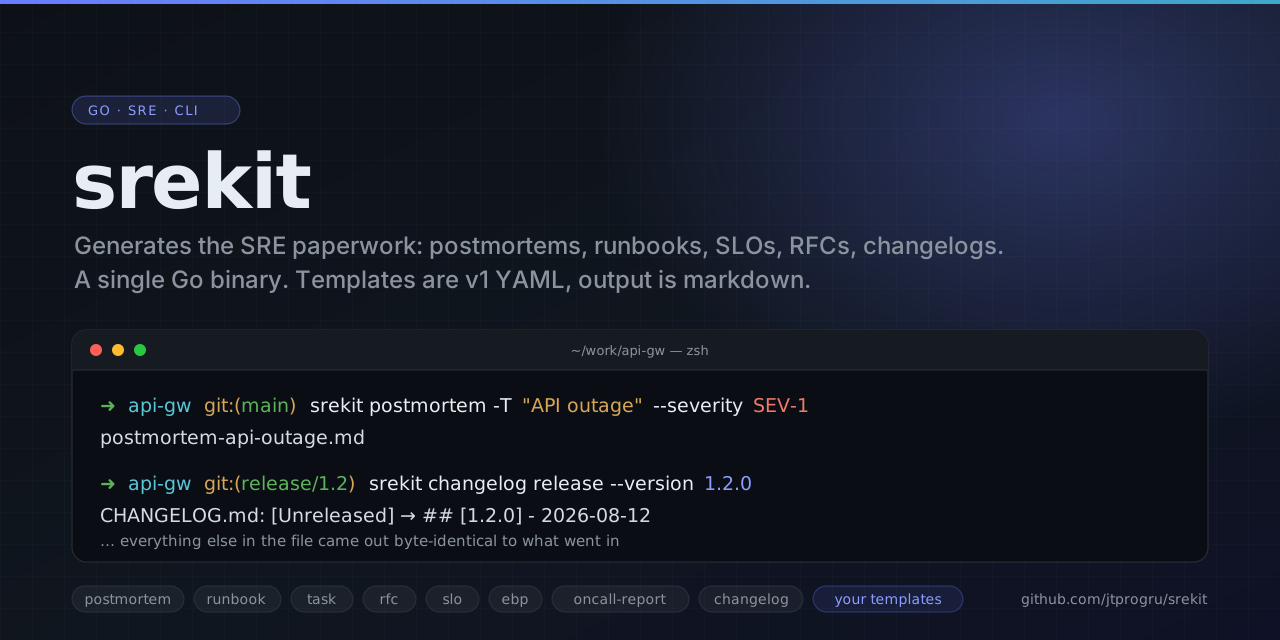
srekit is a CLI that generates the text artifacts SREs deal with every day — investigation logs, postmortems, runbooks, RFCs, on-call reports, SLOs, error budget policies, and changelogs.
A template is not a Markdown file. It is a v1 YAML artifact (postmortem.yaml, slo.yaml, …) that declares frontmatter, an H1, meta bullets and a list of typed sections; srekit composes the Markdown from that declaration. The shipped set is compiled into the binary, so a fresh install renders everything with no files on disk and no network — and a directory of your own artifacts, kept under your own git remote, overrides it file by file, with anything you have not overridden falling back transparently.
Why srekit
SRE work produces a lot of structured documents that read 80 % the same and differ only in 20 % of the meat. Writing them from scratch wastes time and invariably misses sections you wish you had filled in. A generator that ships opinionated, peer-reviewed templates removes the boilerplate so you spend attention on the actual incident, RFC, or postmortem.
What you get
- 9 generator commands —
task,tasker,postmortem,rfc,runbook,changelog,oncall-report,slo,ebp. - Templates as your contract — every artifact is bilingual (Russian headings + English technical terms), ships compiled into the binary, and is overridable via a custom directory under your own git remote.
- Changelog maintenance, not just scaffolding —
changelog releasecuts a version out of[Unreleased]andchangelog validatelints an existingCHANGELOG.mdagainst Keep a Changelog. - Full template lifecycle —
templates init / pull / list / validate / diff / upgrade / migrate, with a true 3-way merge on upgrade. - JSON output — every generator supports
--jsonfor piping intojqand other tools. - A read-only environment check —
srekit doctorreports which config file is actually read, where the templates directory resolves, and whether your artifacts still parse. - Deterministic — no network calls at all, no hidden state. Author/email/repo resolved from local config and
git.
At a glance
# Scaffold a postmortem with today's date and your git identity baked in
srekit postmortem --title "API outage" --severity SEV-1 \
  --start 2026-05-06T08:00Z --end 2026-05-06T09:30Z \
  --owner "@oncall" --out postmortem-2026-05-06.md

# Pipe a generator into jq for scripting
srekit task --title "Tail latency on api-gw" --json | jq -r '.meta.id'

# Manage your customized templates
srekit templates init     # scaffold your own copy
srekit templates list     # see what's customized
srekit templates upgrade  # 3-way merge in new built-in content
Next steps
- Getting started — install, first command, first config.
- Commands overview — the full command surface.
- Custom templates workflow — keep your own templates under git and 3-way-merge upstream changes.
- jtprogru/sre-templates — a ready-to-use templates repo in exactly the layout srekit expects; clone it, point srekit at it, or fork it as a starting point.
- Recipes — practical pipelines (jq, on-call rotation, CI).